Beyond the Classroom
A look at the interests, projects, and ideas that shape how I think about mathematics and teaching.
Computer Science and Mathematics
I use my background in computer science to design interactive ways for students to explore mathematical ideas. Rather than only working through static problems, students engage with concepts through dynamic models and simulations that make abstract ideas more tangible. Below are examples of tools and visualizations I have created interactive models that help students experiment, make predictions, and engage with math in a more hands-on way.
Simulations
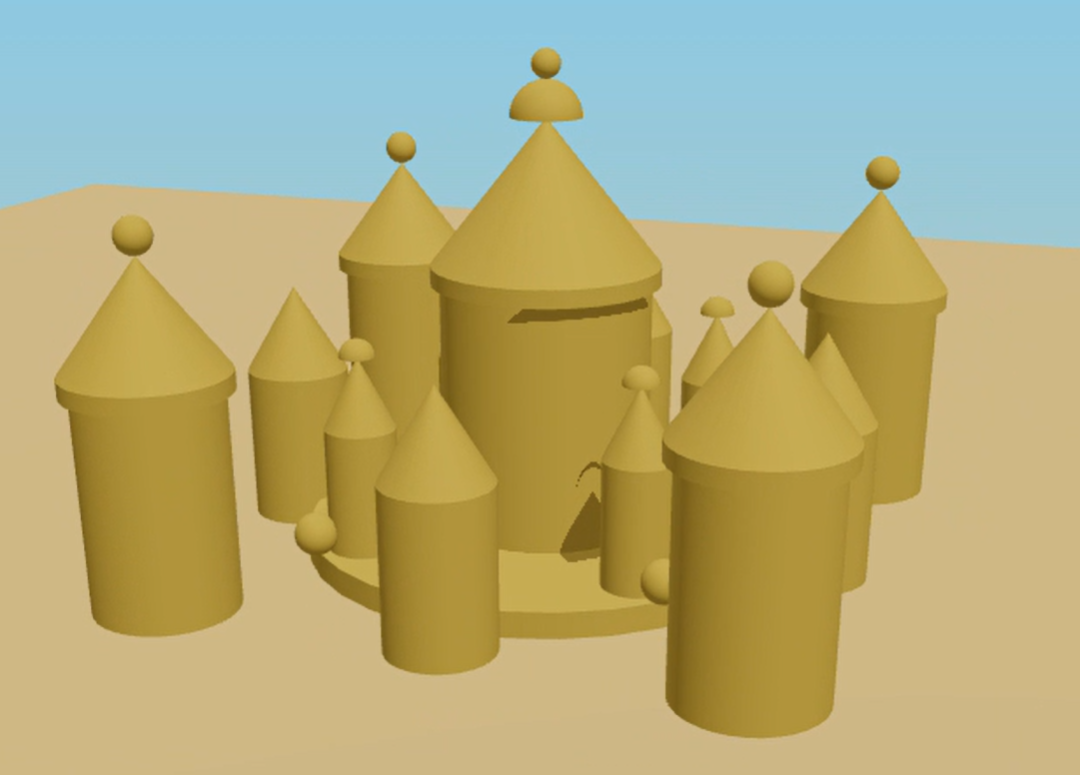
I created an interactive sand castle builder for students learning to calculate the volume of cylinders, cones, and spheres. Students must calculate the volume of each shape before placing it, giving them immediate feedback on their calculations as they see the shape take up space in the "sandbox". This calculation is further grounded in the idea that they are tracking the amount of sand they are using because they are given a real-world constraint of the total amount of "sand" available. This turns volume calculation from a drill exercise into a design challenge with a meaningful purpose.
Try it out — add a cylinder with radius 3 and height 5 (volume = 141.37), or build your own!
Below are some examples of what the completed sand castles can look like.
GeoGebra Activities
I designed the following GeoGebra activities to give students a more exploratory introduction to geometric theorems. Rather than presenting a rule to memorize, each activity invites students to manipulate mathematical objects, notice patterns, and develop the theorem themselves through observation and reasoning. Building these tools required programming, instructional design, and a clear understanding of how to make abstract concepts accessible and engaging.
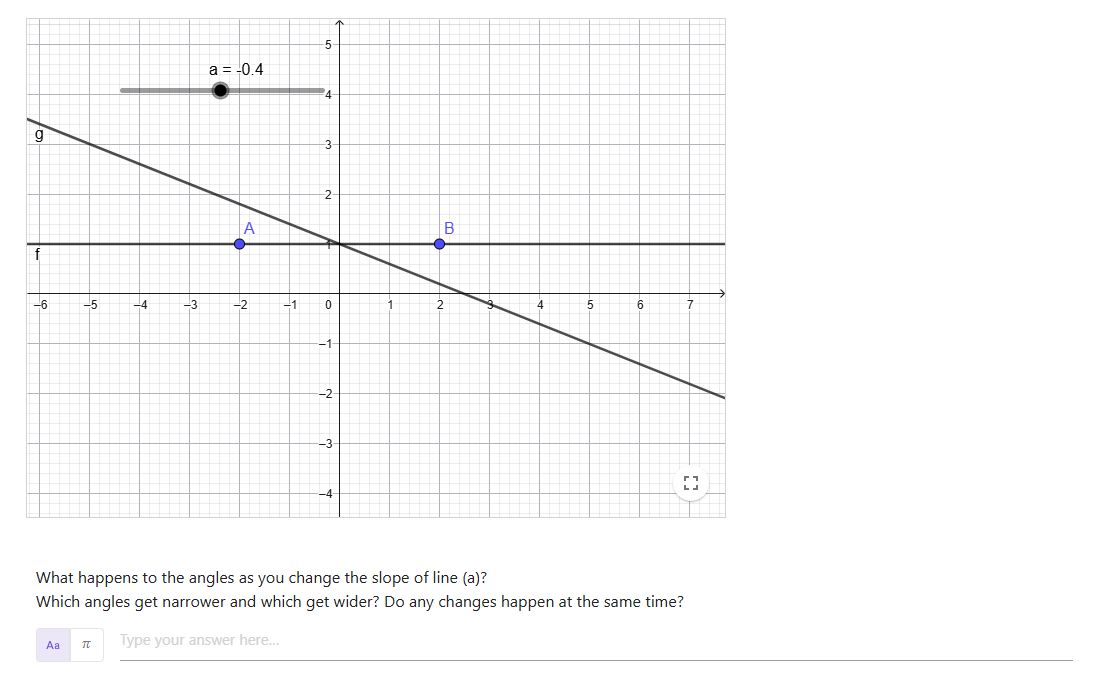
Students explore the Vertical Angle Theorem by manipulating intersecting lines and observing how angle measures change in real time. As they adjust the lines, they notice that vertical angles remain equal regardless of how the lines move, developing the theorem through pattern recognition before moving into formal proof. This was designed for high school geometry students.
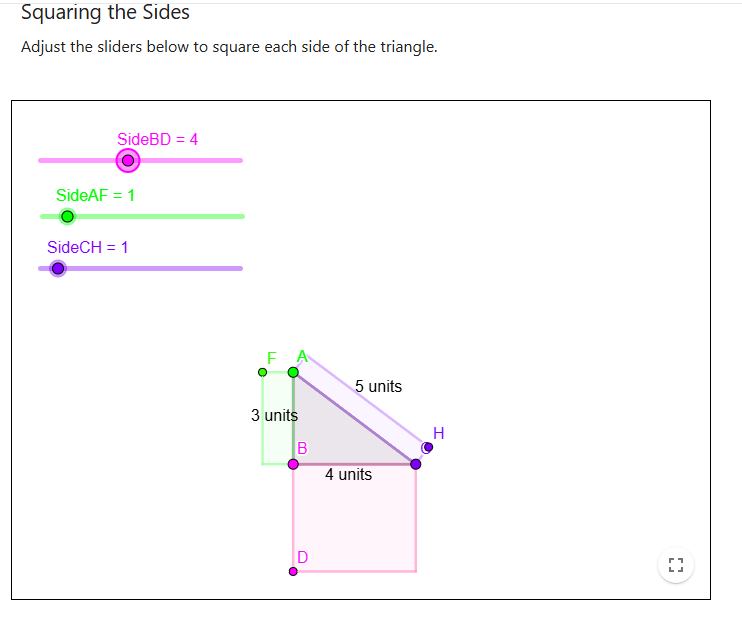
Students build and compare squares on each side of a right triangle, using sliders to explore how the areas change. They notice a consistent relationship: the combined area of the squares on the legs always matches the area of the square on the hypotenuse, before expressing this relationship algebraically and using it to solve for unknown side lengths.
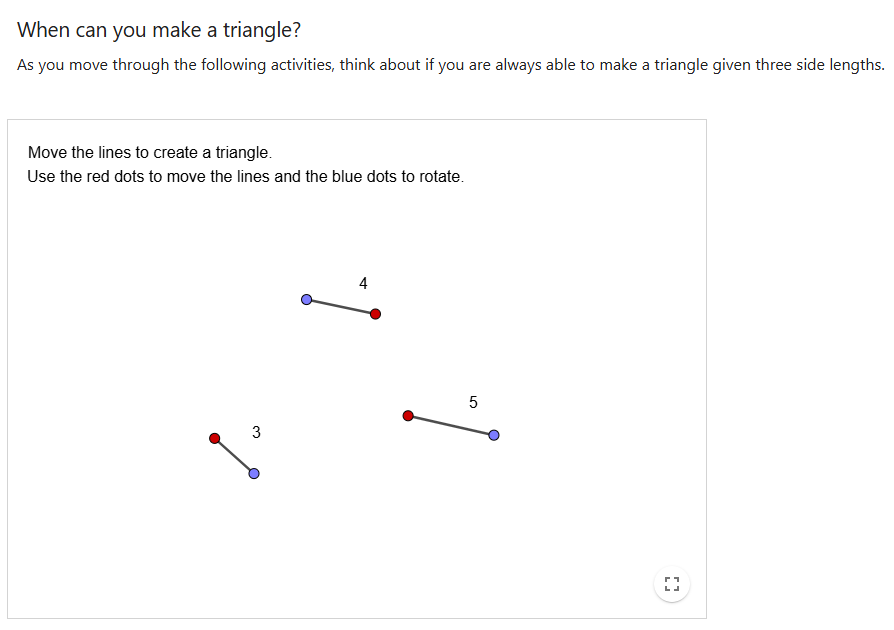
Students investigate when three side lengths can form a triangle by testing different combinations and observing the results. By comparing valid and invalid cases, they discover that a triangle can only be formed when the sum of any two side lengths is greater than the third. This is supposed to help them develop an intuition for the Triangle Inequality Theorem through reasoning and counterexamples rather than memorization.
Pixel Art Activity Creator
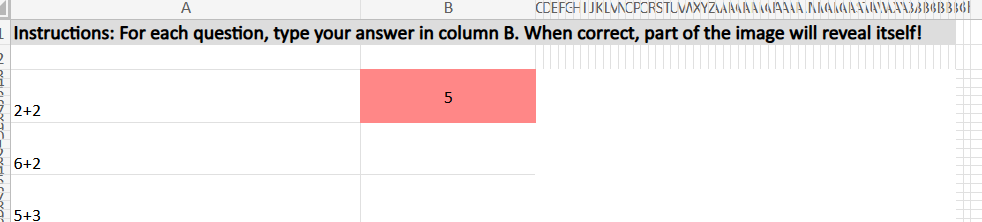
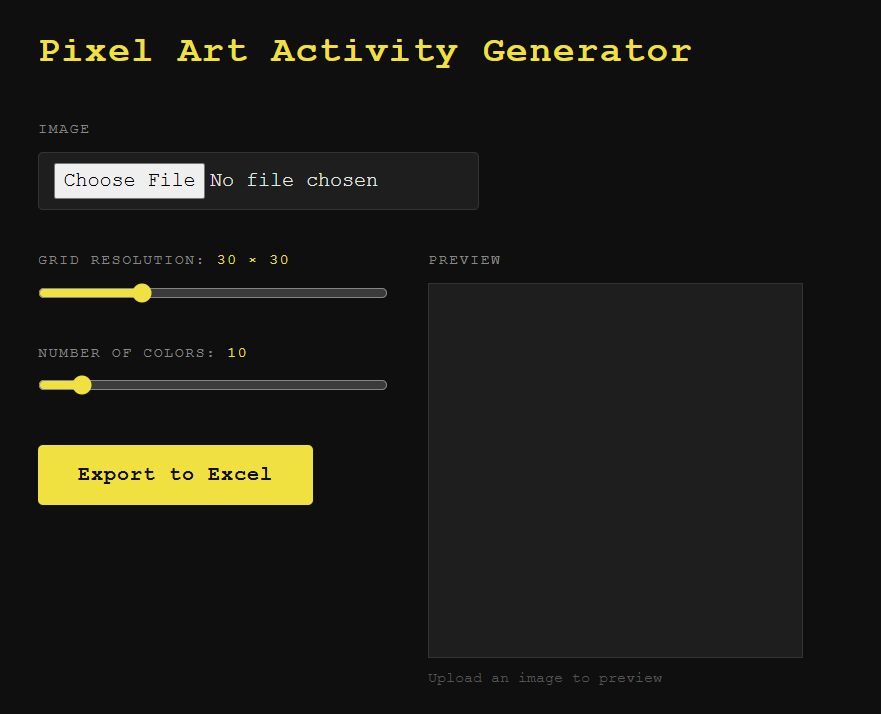
My mentor teacher assigned pixel arts to students occasionally as a fun way to practice material and get immediate feedback on whether their answers were correct. I created a tool that allows teachers to easily generate pixel art templates from any image, making it easy to create custom pixel art activities for students. Teachers can upload an image, adjust the pixelation level, and download a grid template that students can fill in based on their answers to questions. This tool streamlines the process of creating engaging pixel art activities and allows for more creativity in the types of images used.
This shows an example of the use of the pixel art activity. When the student answers the question incorrectly, the answer will turn red, but if they answer correctly, the answer will turn green and the corresponding square in the grid will be filled in, allowing them to see their progress as they work through the problems. This provides immediate feedback and a visual representation of their learning, making it a fun and effective way to practice material.
This shows the steps of interacting with the website to create a pixel art template.
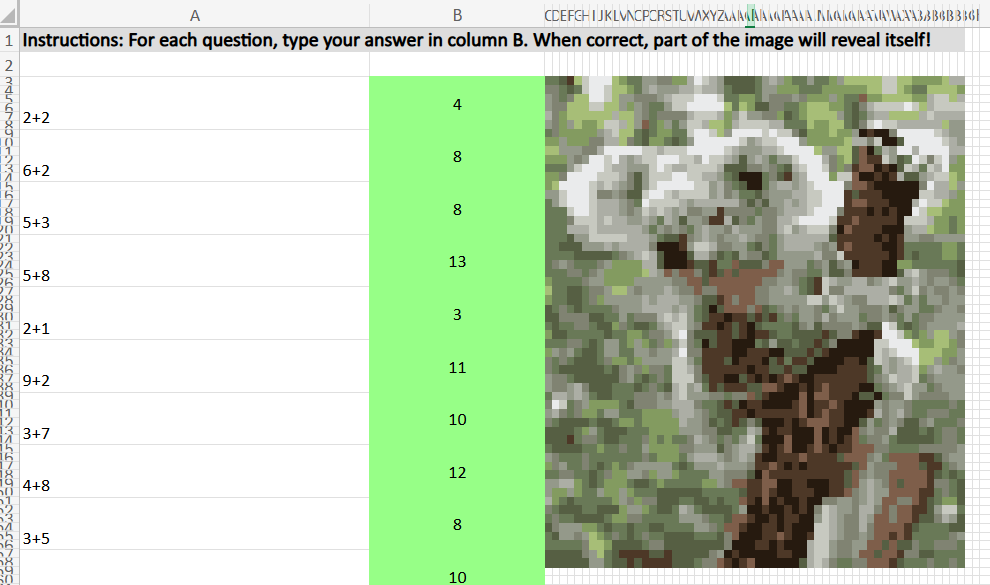
This shows a completed pixel art.
Creativity in Math
One way I explore the creative side of mathematics is through writing mathematical limericks. The goal is to create short, playful poems that capture concepts in a memorable way. I was inspired by reading Math Through the Ages, which describes how Indian mathematicians in the 12th century often wrote mathematical problems in verse. Famous examples include writing by Bhaskara II, who posed problems like: "The eighth part of a troop of monkeys, squared, was skipping in a grove... how many were there in all?" This practice highlights a view of mathematics that extends beyond the purely practical into something expressive and artistic. I want students to experience that side of math and see it not only as something to solve, but as something they can create with.
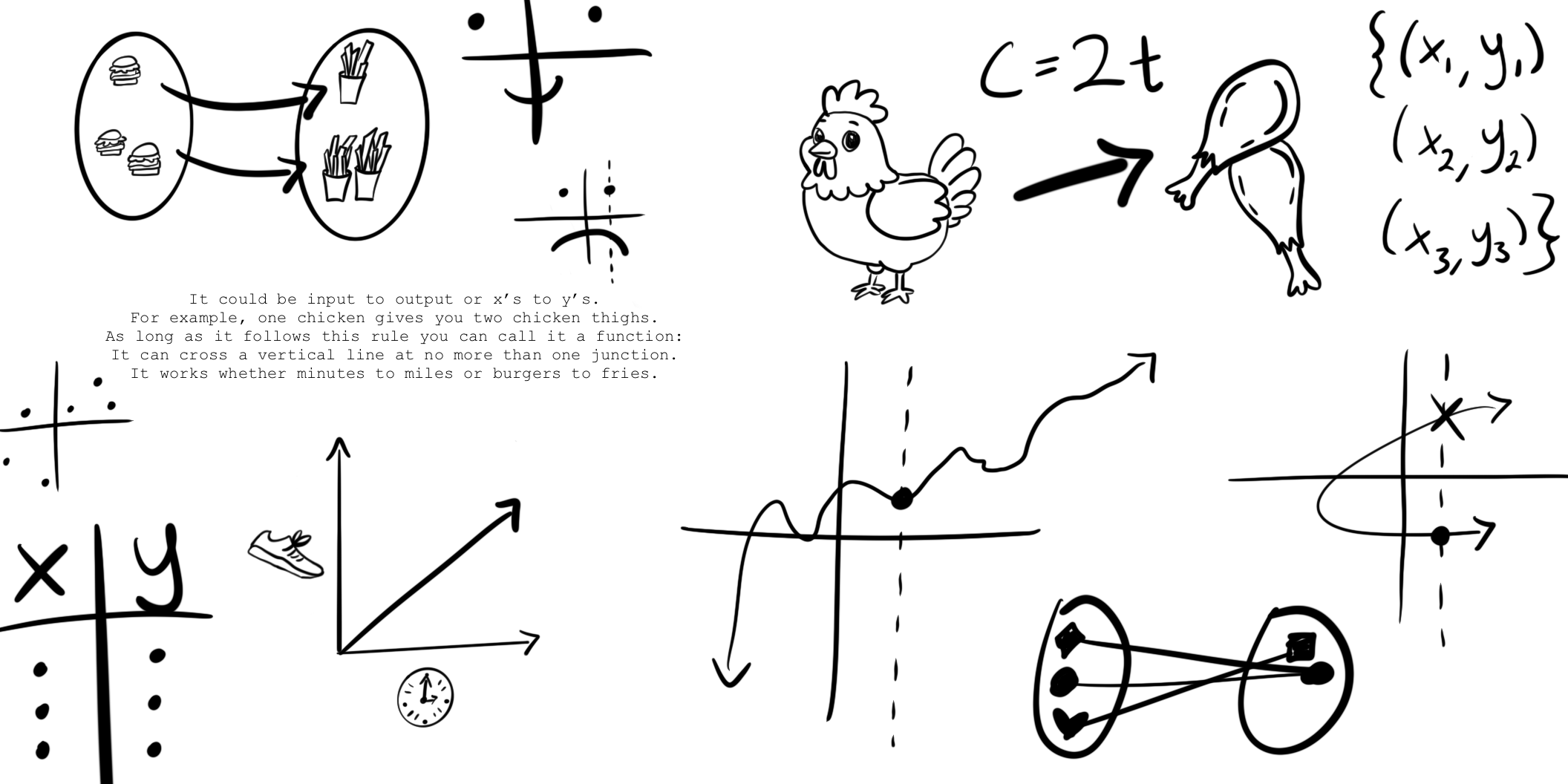
Highlights the vertical line test for functions, with illustrations showing multiple representations beyond only graphs.
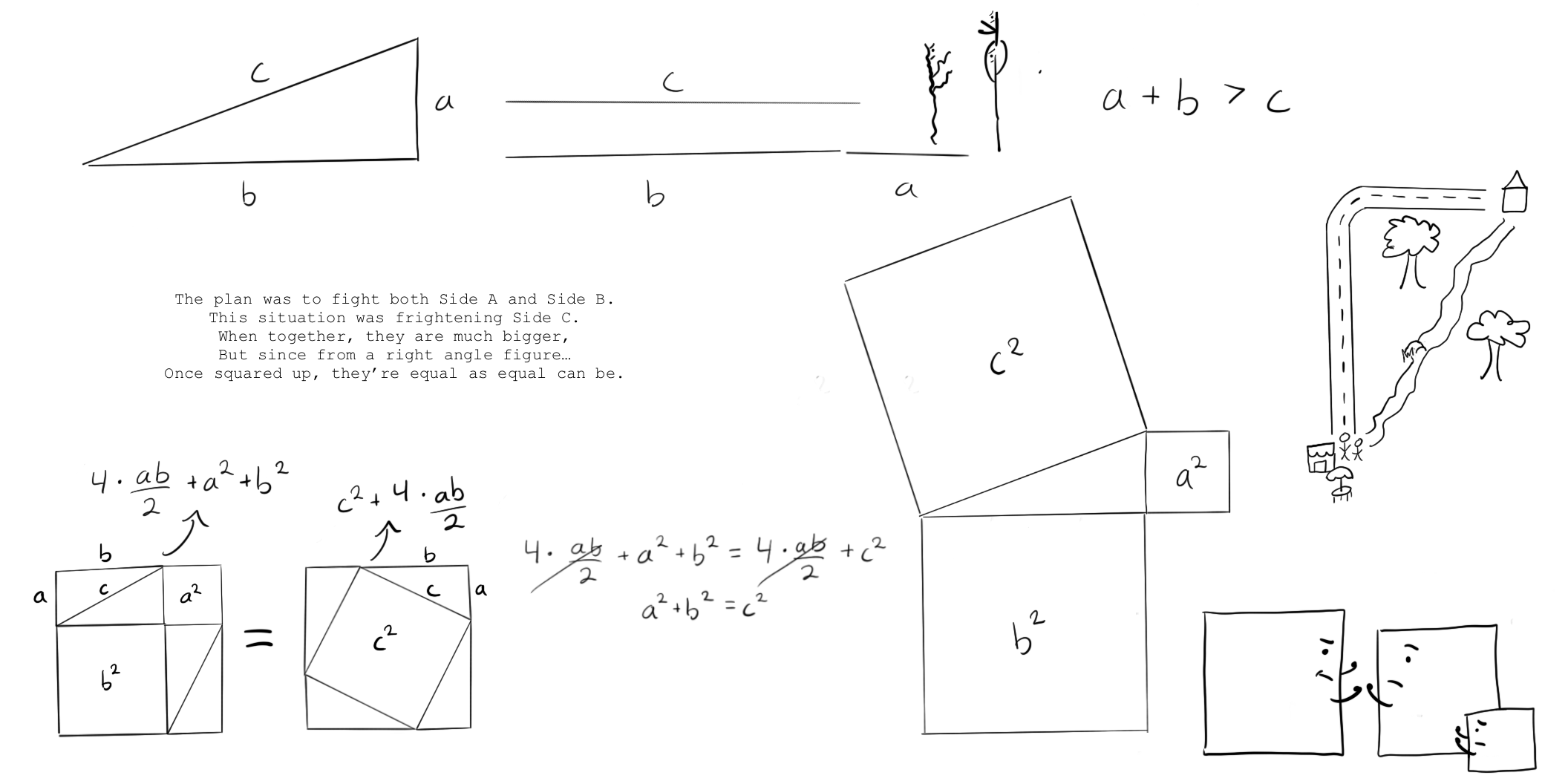
Covers properties of right triangles, including the Pythagorean theorem and the hypotenuse as the longest side. Illustrations include a visual proof and playful drawings of the squares and sides as characters.
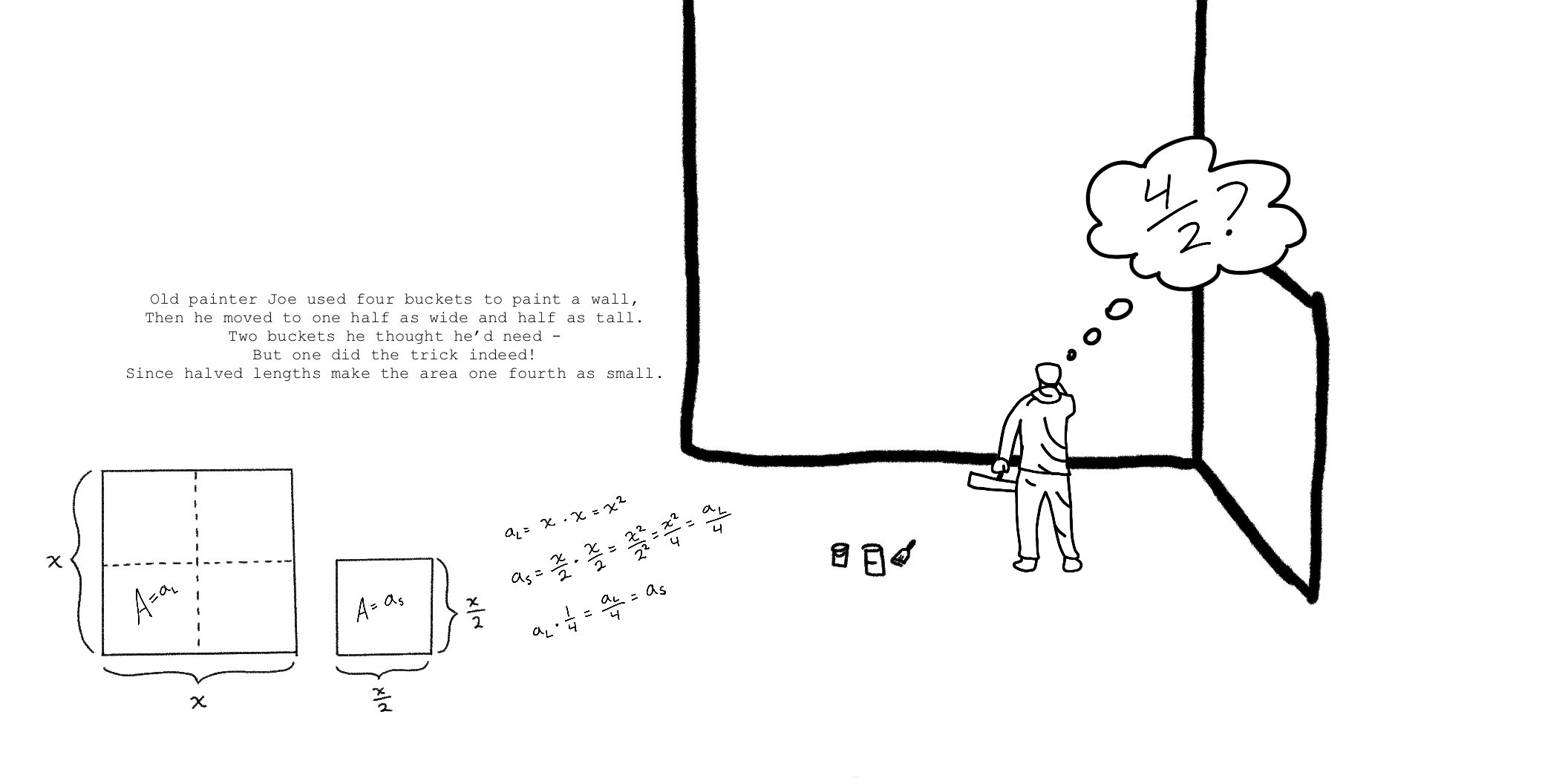
Explores scale factors in geometry and addresses the common misconception that scaling side lengths always results in a proportional change in area, using the practical context of painting a wall.
Must Reads
My teaching is continually shaped by educators and researchers who emphasize student thinking, exploration, and meaningful engagement with mathematics. The following texts have had a significant influence on how I design lessons and structure classroom experiences.
A Mathematician's Lament — Paul Lockhart
This essay challenged my perspective on how mathematics is often taught, arguing that traditional instruction can strip the subject of its creativity and meaning. It reinforced my belief that math should be experienced as an exploratory and artistic discipline, where students are encouraged to play, conjecture, and discover ideas rather than follow rigid procedures.
The First Days of School — Harry Wong
This book shaped my understanding of classroom management and the importance of establishing clear expectations and routines from the very beginning. It emphasized that a well-structured environment allows students to focus on learning, and that consistency and clarity are key to building a positive and productive classroom culture.
Building Thinking Classrooms in Mathematics — Peter Liljedahl
This book has influenced how I structure collaborative work and design tasks that promote deep thinking. It emphasizes creating environments where students engage in genuine problem-solving and learn from one another, rather than relying on direct instruction alone.
Math Through the Ages — William P. Berlinghoff & Fernando Q. Gouvêa
This book deepened my appreciation for the historical and creative dimensions of mathematics, highlighting how mathematical ideas have been expressed across cultures and time. It reinforced my goal of helping students see math as both a human and creative endeavor.