The Classroom Environment
Creating a safe, respectful, and well-organized learning environment
Room Layout & Table Arrangements
The physical arrangement of a classroom communicates expectations and shapes how students interact with each other and with the teacher. The following diagrams document two arrangements used during my student teaching placement and the reasoning behind the transition between them.
When I entered my student teaching placement, the classroom was arranged in ten table groups. This arrangement was designed to facilitate collaborative work and peer discussion, with students seated in small groups facing each other.
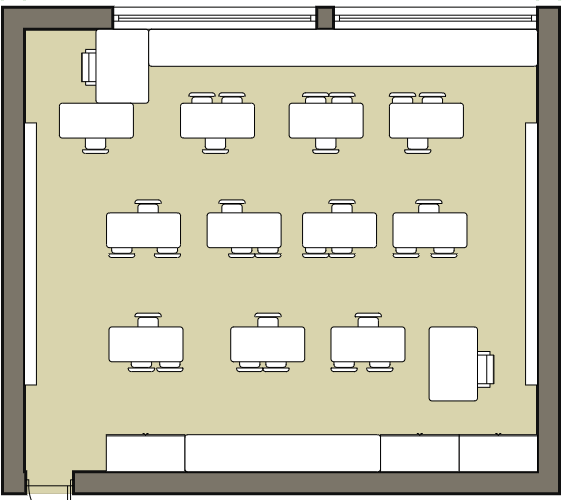
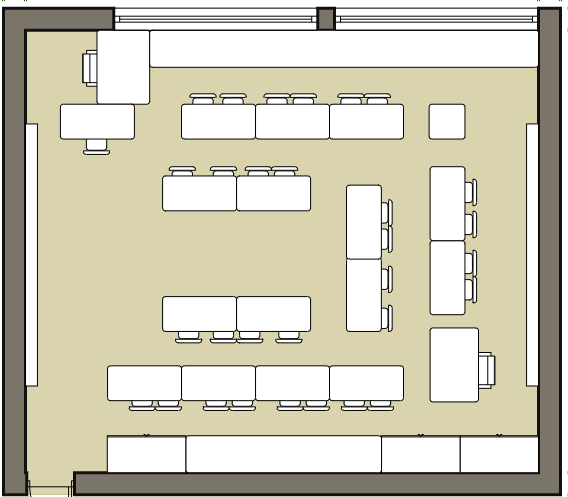
After observing the class for several weeks, my mentor teacher and I made the collaborative decision to transition to a horseshoe arrangement. This change was driven by the behavioral dynamics of the class, the table group arrangement made it difficult to maintain student focus and manage off-task conversations between students. The horseshoe arrangement allowed every student to face the board, reduced opportunities for disruptive side conversations, and gave me easier access to all students during instruction and independent work.
Seating Chart
I used the seating chart system that my mentor teacher used. Her systems involved changing the seating chart every week. The following images show how I displayed the seating chart for each week.
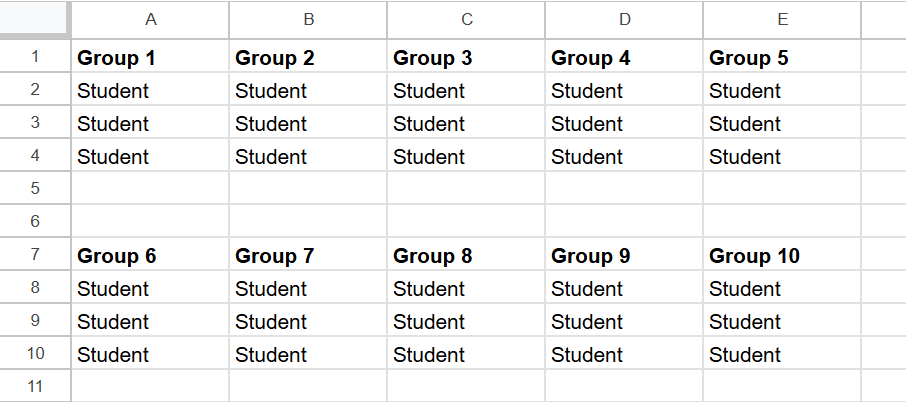
This is how I display the seating chart. Each "student" would be a student name. For the 10 tables seating arrangement, this tells the students which table they are seated at, but not which seat at the table. This allows for flexibility in seating arrangements and encourages students to interact with different peers. The horseshoe seating specifies the exact seat that they should be seated in.
Classroom Management
A consistent and fair approach to classroom management is essential to maintaining a productive learning environment. The following outlines the strategies and escalation steps I used during my student teaching placement, prioritizing positive reinforcement and the least disruptive intervention before escalating further. This plan reflects both my own approach and the school's established protocols.
Proactive Strategies
- Positive praise — Actively and publicly recognize students who are on task and making good choices to reinforce expected behaviors and set a positive tone for the class.
- Proximity — Move near students who are becoming disruptive to redirect behavior without interrupting instruction or drawing attention to the student.
Escalation Steps — Disruptive Behavior
- Verbal warning — Issue one clear, private warning addressing the behavior directly.
- Step outside — teacher check-in — Ask the student to step outside the classroom for a brief break. Check in with them privately to discuss the behavior and determine whether they are ready to return and re-engage productively.
- R&R (Reset and Restore) — If the behavior continues, utilize the school's R&R protocol, in which another staff member comes to speak with the student and support them in resetting before returning to class.
- Second R&R — A second R&R referral for continued or repeated behavior within the same class period.
- Write-up — Repeated or escalating behavior that cannot be resolved through the above steps results in a formal write-up submitted to the administration.
Additional Responses
- Repeated disruptive behavior across multiple days — Contact home to inform the family, enlist their support, and work collaboratively toward a solution.
- Non-disruptive disengagement — For students who are not causing disruption but are consistently not engaging with the work, reach out to families via email to open a conversation about how to better support the student.